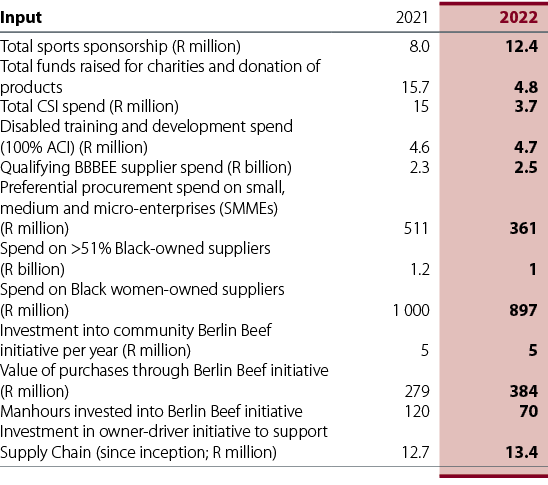
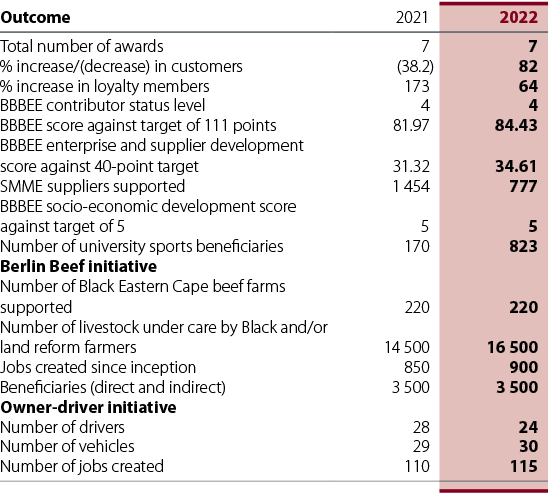
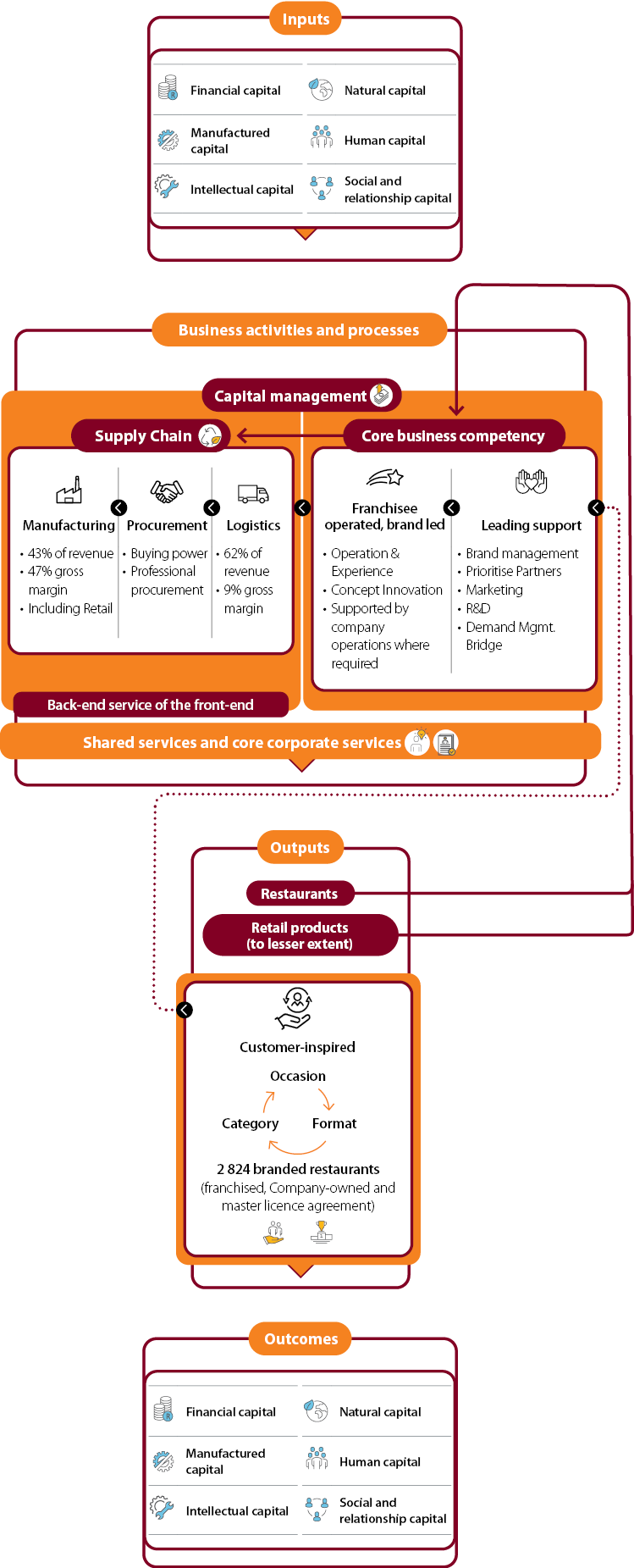
Our innovative branded food services solutions and unique customer experiences drive sustainable growth and value creation. Our ability to create aspirational and market-leading brands that delight our customers is key to our success. We maintain our capacity to create sustainable long-term value outcomes for our stakeholders through the appropriate use of our inputs in efficient business processes. Our inputs and outcomes aligned with the six capitals are provided in more detail in the following pages and should be read in the context of our strategic objectives.
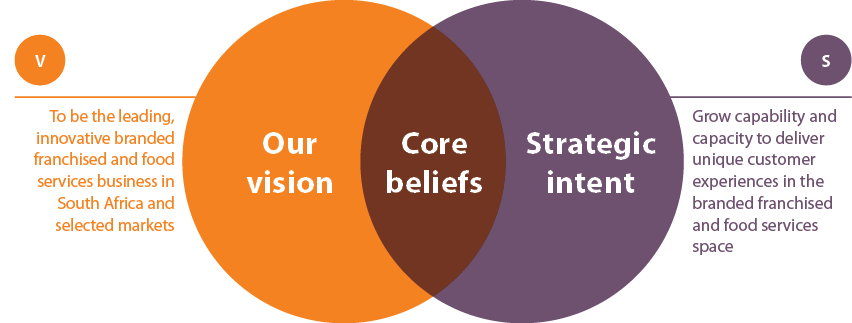
Core Beliefs


Strategic objectives
Placement of the strategic objective icons in the business model to the left, represents the link between strategy and business model.

|
Improving our operational efficiencies |

|
Enhancing our financial performance |

|
Prioritising our franchise partners |

|
Developing our people; ongoing commitment to transformation |

|
Leading in the categories we compete in |

|
Optimising capital management |

|
Ensuring regulatory compliance |
Famous Brands applies and transforms the six capital inputs to create and preserve value for stakeholders.1
| 1 | Excludes our associate companies. |
Financial capital
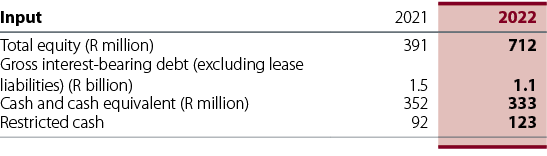
Financial capital refers to our financial resources, including financial reserves and debt funding for continuing operations.
Read more in the Group Financial Director’s report and the Summarised Consolidated Financial Statements.
We manage and allocate our capital appropriately to create long-term value for our shareholders. We invest our capital in a deliberate manner to grow and sustain our business.
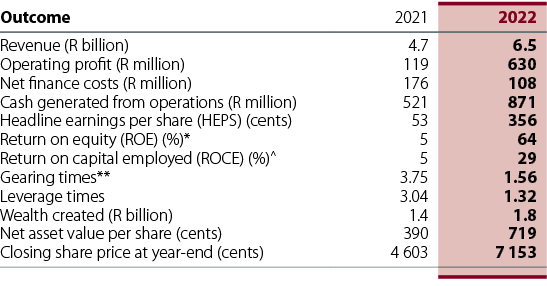
| * | Headline earnings as a percentage of average total equity |
| ** | Includes IFRS 16 Lease Liabilities. |
| ^ | Operating profit divided by capital employed |
Manufactured capital
This refers to the Group’s physical footprint, equipment, fleet and IT systems that support business activities.
Read more in the operational review.
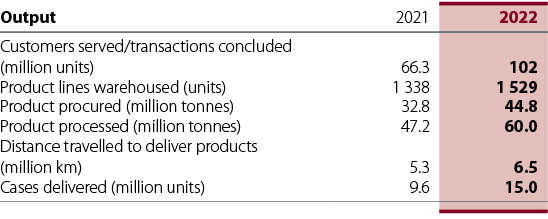
Ongoing investment in Company-owned restaurants, facilities, equipment, fleet and IT infrastructure allows us to remain relevant to customers and support our franchise partners. Over time, we will continue to reduce our environmental impact. Through our business activities, we create social and economic value and minimise the negative impact we have on the environment.
Restaurants which are conveniently sited and appealing to our customers provide optimal returns for our franchise partners and investors. Efficient Manufacturing and Logistics ensure we provide a high-quality, competitive Supply Chain service to our franchisees.
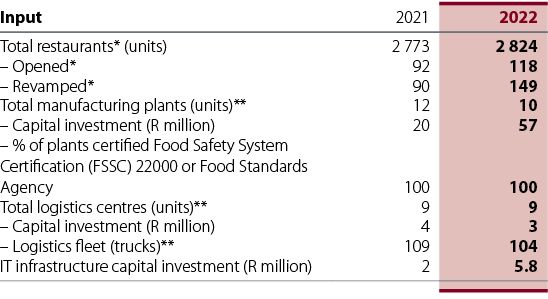
| * | Pertains to total restaurant network. |
| ** | Pertains to SA. |
Intellectual capital
This refers to the intangible assets that give Famous Brands a competitive edge and support its brand and reputation.
The Group’s brands are listed under Our brands.
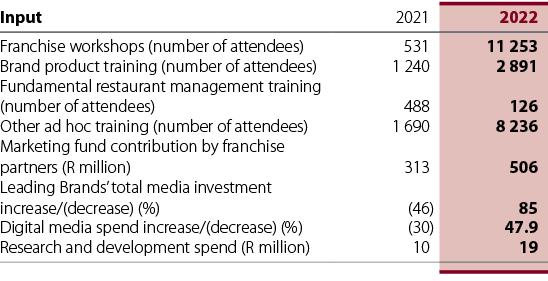
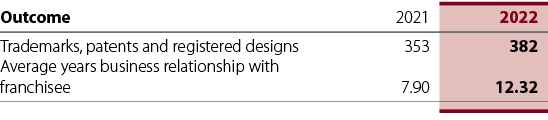
We must stay informed of fast-changing consumer trends affecting menu design, food choices and dining experiences. We rely on our franchise partners to re-invest responsibly in their businesses and manage their operations efficiently to create value. It is a business imperative that our brands instil confidence among our stakeholders and that we protect those brands with the appropriate legal framework.
Human capital
Human capital refers to the economic value of our workforce, including employees’ experience and skills.
Read more about the Group’s transformation journey.
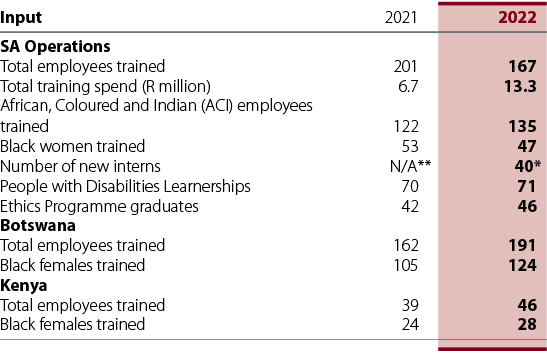
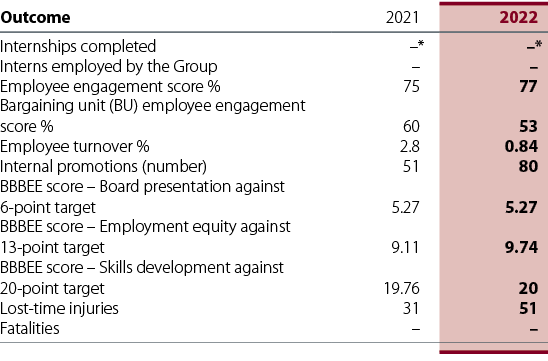
Our business model relies on having the right people with the right skills in the right jobs to create value. We invest in upfront and ongoing training for franchise partners and their employees to ensure that all stores deliver on their brand promise.
| * | This course is still to be completed. |
| ** | Cancelled due to COVID-19. |
| * | Cancelled due to COVID-19. |
Natural capital
Natural capital refers to the elements of the natural environment that provide valuable goods/inputs to Famous Brands and that we might impact through our products and services.
Read more about the Group’s sustainability initiatives and its report on environmental activities.
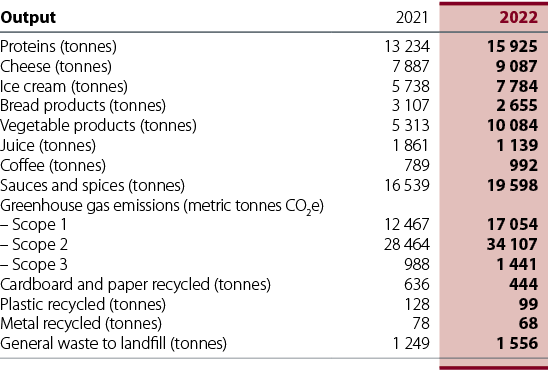
Our business model uses natural resources in the Supply Chain process with unavoidable environmental impacts. Our Environmental and Climate Change Policy outlines our responsible practices with targets to reduce our carbon footprint.
Eliminating food waste is a priority issue for our industry. We actively promote portion control and practices across our stores. Our franchise partners voluntarily participate in responsible food redistribution by donating excess food.
We have committed to eliminating all single-use plastic across our restaurant network by 2025. This will be replaced by fully recyclable or biodegradable alternatives.
The numbers below are for the SA Supply Chain operations only.
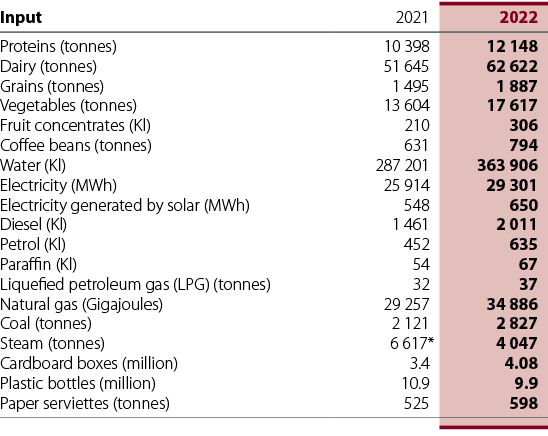
| * | Steam produced by a third-party provider with its own electricity inputs. |
Social and relationship capital
This refers to the value of social relationships and networks that support our growth and sustainability.
Read more about the Group’s transformation journey and its CSI activities.
Our business model is highly dependent on strong, mutually beneficial relationships with stakeholders. These relationships secure our reputation and enable us to meet our growth objectives. We are committed to community upliftment through our CSI initiatives.