

We view transformation as a social, moral and strategic business imperative. We strive to foster a more equal and inclusive society through the ongoing transformation of our business and initiatives that improve the lives of previously disadvantaged South Africans.
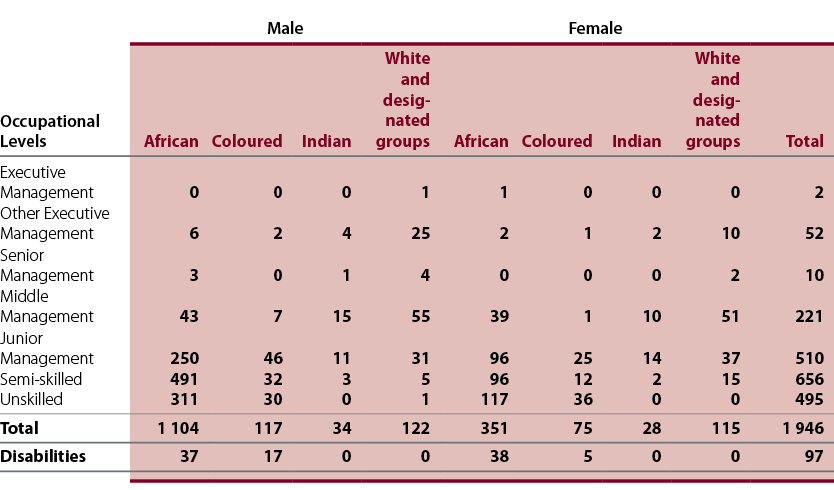
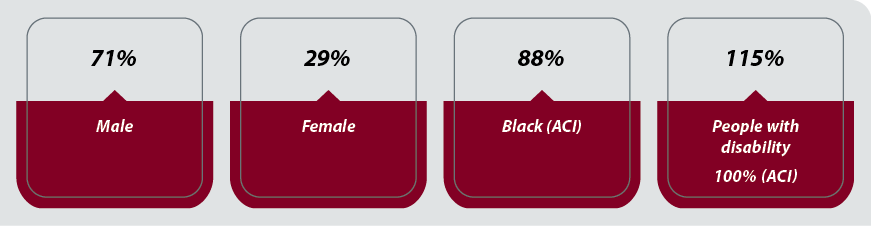
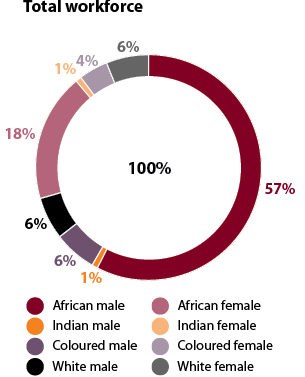
Famous Brands works towards an employee demographic that represents South Africa. We have made good strides to transform our business over the years. We observe the principles of equality and fair treatment in all operations and interactions with employees.
In South Africa, our business transformation strategy follows the objectives of the Department of Trade and Industry’s BBBEE Codes of Good Practice. In 2021, Famous Brands moved from the CATHSSETA (Tourism and Hospitality) to the FOODBEVSETA (Food and Beverages), which is more aligned with our business activities.
Together with our executive leadership team, our Group Transformation Manager is responsible for executing our BBBEE transformation strategy across the business. Transformation is monitored by the Social and Ethics Working Committee and the Board’s Social and Ethics Committee. We follow best practices and align our activities with the 10 Principles of the United Nations Global Compact. We ensure that we operate according to high standards of responsibility, ethics and accountability.
The BBBEE scorecard
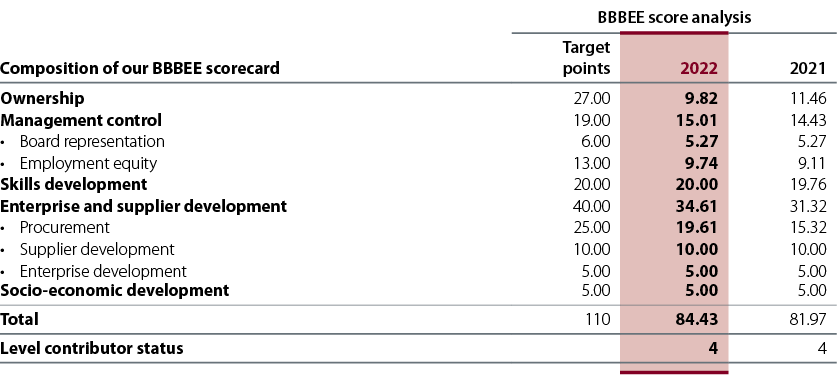
We aim to improve our scores across the five elements of the BBBEE. These are ownership, management control, skills development, enterprise and supplier development and socio-economic development. We have moved from being non-compliant in 2018 to a level 4 rating in 2022. The consistent progress achieved in improving our BBBEE score is depicted in BBBEE compliance.
This report provides details on our progress, targets and outlook regarding our transformation journey. While much progress has been achieved, we acknowledge that there is much work still to be done. We believe that the strategies to entrench diversity in the boardroom, our workforce and our supply base are gaining momentum.
Ownership
The ownership element measures the effective ownership of enterprises by Black people, including how they are entitled to the voting rights and economic interest associated with the equity holding. Voting rights afford the rights to determine strategic and operational policies of an enterprise, while economic interests result in the accumulation of wealth by Black people.
Black ownership decreased from 14.4% in 2021 to 12.08% in 2022, based on an analysis of mandated investments. Famous Brands shares are publicly traded on the JSE, and many of our shareholders are ordinary South Africans who own shares through their pension funds and other investments. We commit to continue monitoring our ownership status while listed on the JSE.
Management control
Management control is exerted through the Company’s governing bodies, including the Board and executive management. At the time of verification in September 2021, the Board comprised 40% Black directors, with Black women making up 30%. Read more about our Board and Exco composition.
Employment equity
The employment equity element measures initiatives intended to promote equal opportunity and fair treatment in the workplace under the regulations of the Employment Equity Act, No 55 of 1998. At Famous Brands, diversity is our strength, and employees have equal access to opportunities and resources and are encouraged to contribute to Famous Brands’ success.
We improved our employment equity score from 9.11 to 9.74. This is a true reflection of the commitment to targets we set with the Department of Labour.
Skills development
Famous Brands engages, develops and retains a high-value workforce by investing in skills development programmes.
The skills development element measures the extent to which the Company provides ongoing training and development of the core technical skills and competencies of Black people to support their performance and career progression while also enriching the local labour pool.
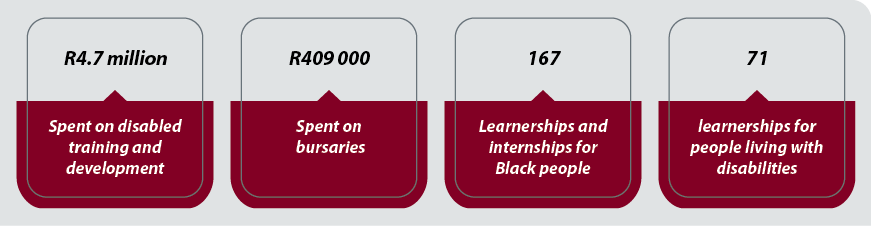
Our talent development is a key focus that supports our transformation journey. Management continuously improves the necessary integration between employment equity and talent development while delivering a value-adding learning and development strategy. Key projects included our learnership and internship programmes which provided an opportunity to 167 young Black South Africans.
We spent approximately 85% of our total skills development budget on the development of Black employees across all levels. Of this, 15% was spent at senior and executive management levels.
The HR teams play a critical role in developing employees and assisting the business in achieving its objectives. Training initiatives include the Executive Development Programme, International Executive Development Programme, Managers Challenge, People with Disability Programme, learnerships and internships.
Case study: Saying yes to YES
Establishing a Barista training programme will set Famous Brands apart from its competitors in the preparation of coffee while setting new and improved industry standards.

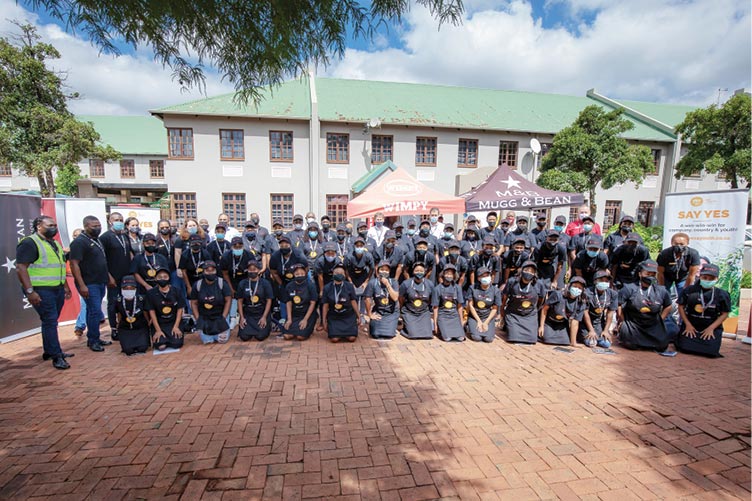
In February 2022, we announced the launch of the Famous Brands Academy Barista Learnership. We have partnered with the Youth Employment Service (YES) Programme to offer 120 unemployed youths a 12-month work placement.
The youths will begin a training course focussed on coffee and the skills required to be outstanding baristas. They will also undergo the Training Institute’s Team Members training, covering all aspects of working in a restaurant. They will be placed in franchise partners’ stores to gain crucial work experience for the remainder of their 12-month learnerships. The youths will gain the experience they need to secure a full-time position, while Famous Brands also benefits from a talent pipeline of trained baristas to place in our stores.
They will also complete the YES readiness training programme with 25 modules on life skills, such as money management and digital literacy.
Darren Hele signed the YES CEO pledge to fully commit to this programme. YES is a South African non-profit that brings together business, government and labour to address South Africa’s youth unemployment crisis. Since being founded three years ago, YES has worked with over 1 814 South African companies to create more than 70 400 work experiences.
The YES initiative allows for up to two BBBEE levels of enhanced BBBEE status recognition. This depends on the level of job creation against the prescribed targets and the subsequent absorption of the youths.
Enterprise and supplier development
The enterprise and supplier development element comprises preferential procurement and enterprise and supplier development. It is designed to widen market access for entities to integrate them into the mainstream of the economy by encouraging the adoption of BBBEE.
Preferential procurement refers to the extent to which Famous Brands buys goods and services from suppliers with excellent BBBEE credentials. Enterprise and supplier development refers to the monetary and non-monetary support to develop and foster new or existing small and micro Black-owned enterprises.
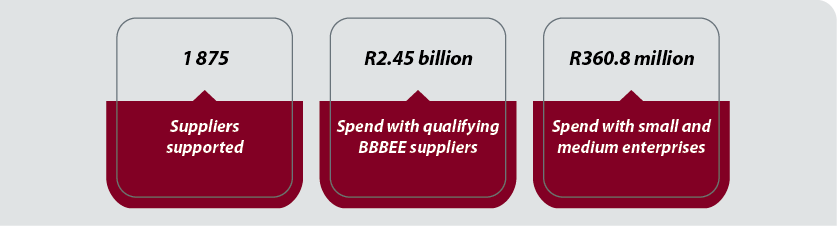
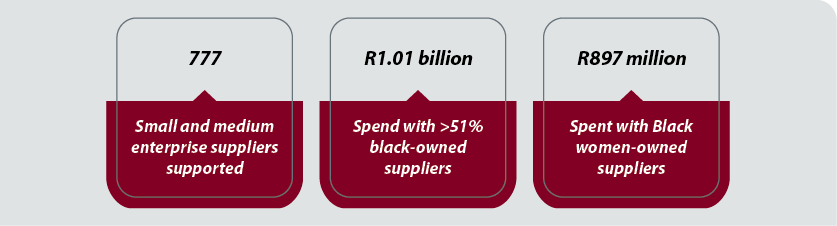
The increase in our score for preferential procurement reflects our commitment to increased investment in procuring from Black, Black women-owned and qualifying small and micro-enterprises.
We are actively investing in the transformation of our Supply Chain. We focus on understanding the contributor level of each supplier in the database. Suppliers between non-compliant and a level 5 contributor status are assisted with a transformation plan or replaced with a qualifying supplier. We also track BBBEE certificates and monitor our supply chain BBBEE initiatives each month.
Enterprise and supplier development
We continue to invest in enterprise and supplier development projects that add supplier diversity and embark on new projects that add value to our Supply Chain. Below are some of the key initiatives:
Berlin Beef
Famous Brands is working to enhance sustainable cattle production in previously disadvantaged communities to improve their economic participation in the red meat value chain and create Black commercial beef farmers.
Famous Brands has supported the Berlin Beef project since 2018. The next exciting project in development is the Eastern Cape Beef Breeding Cluster.
More than 75% of cattle slaughtered countrywide are finished in feedlots. More than 90% of slaughtered stock comes from the commercial sector, despite the fact that 40% of cattle are farmed by smallholder farmers.
The main limitations of smallholder livestock production are poor genetic make-up of the cattle and natural resources management. These limitations affect the quality and consistency of production and reduce the marketability of livestock.
This project seeks to improve the quality of the existing cattle by introducing suitable and adaptable genetic material that will be accepted by the formal market. In addition, the project trains and capacitates farmers on natural resources management to enhance livestock production. This will allow smallholder farmers to take advantage of the market opportunity provided by the Berlin Beef and Famous Brands partnership.
The project targets 200 Black smallholder farmers and 1 000 communal farmers based in 200 villages in the Eastern Cape. The project will allocate 200 breeding bulls and 10 000 breeding heifers to these emerging farmers. Each village has an average of 40 households, and this will result in economic benefit to approximately 8 000 families located in the participating villages.
Famous Brands will benefit from receiving a consistent supply of high-quality, locally produced beef. This beef is from a BBBEE compliant supplier ensuring that Famous Brands receives enterprise and supplier development points from this initiative.
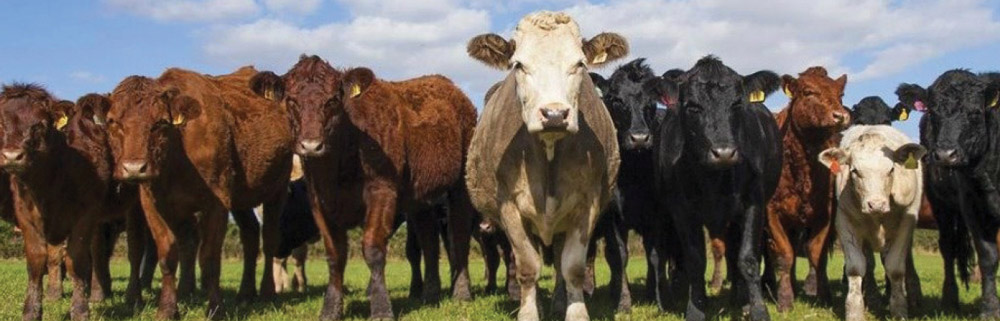
Berlin Beef initiative in numbers

Owner-Driver Programme
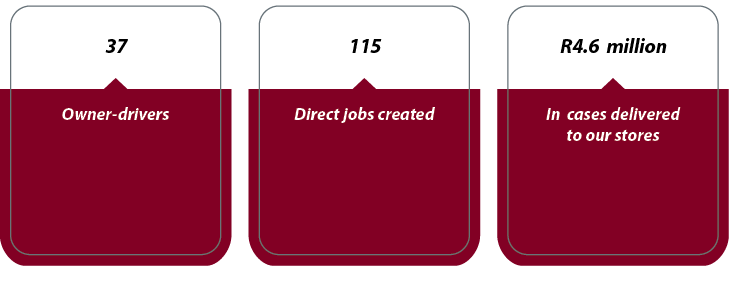
Our Owner-Driver Programme was developed in 2010 to assist Black drivers in starting their own businesses. The primary objective behind the programme’s implementation was to drive efficiencies and improve productivity and customer service levels in our distribution network.
Owner-Driver Programme in numbers
Socio-economic development
Socio-economic development contributions are those financial or non-financial contributions to individuals or communities where at least 75% of the beneficiaries are classified as Black. Our socio-economic development initiatives are rooted in supporting and investing in our communities. A few of our key initiatives are included below:
|
R1.47 million was invested in food donations to the community reaching 5 000 beneficiaries in four provinces within South Africa. |

|
R7 million was invested in grassroots sports development reaching over 400 beneficiaries across six sporting codes in five provinces within South Africa. |

|
R1 million was donated to support children who have cancer. |
Outlook
We remain committed to identifying additional strategies for all BBBEE elements to create value and contribute positively to society. As agreed with the BBBEE Commission, we have moved our BBBEE verification timeline and will issue our BBBEE certificate by end August 2022. Our commitment is linked to the ever-changing legislative requirements, and we strive to ensure compliance which will add value to all stakeholders involved.
